
Gemini 3 Capabilities: Multimodal Chat, Reasoning, and Code
Gemini3 Team · July 18, 2026 · 5 min read
What “Natively Multimodal” Actually Means — And Why It Changes Everything
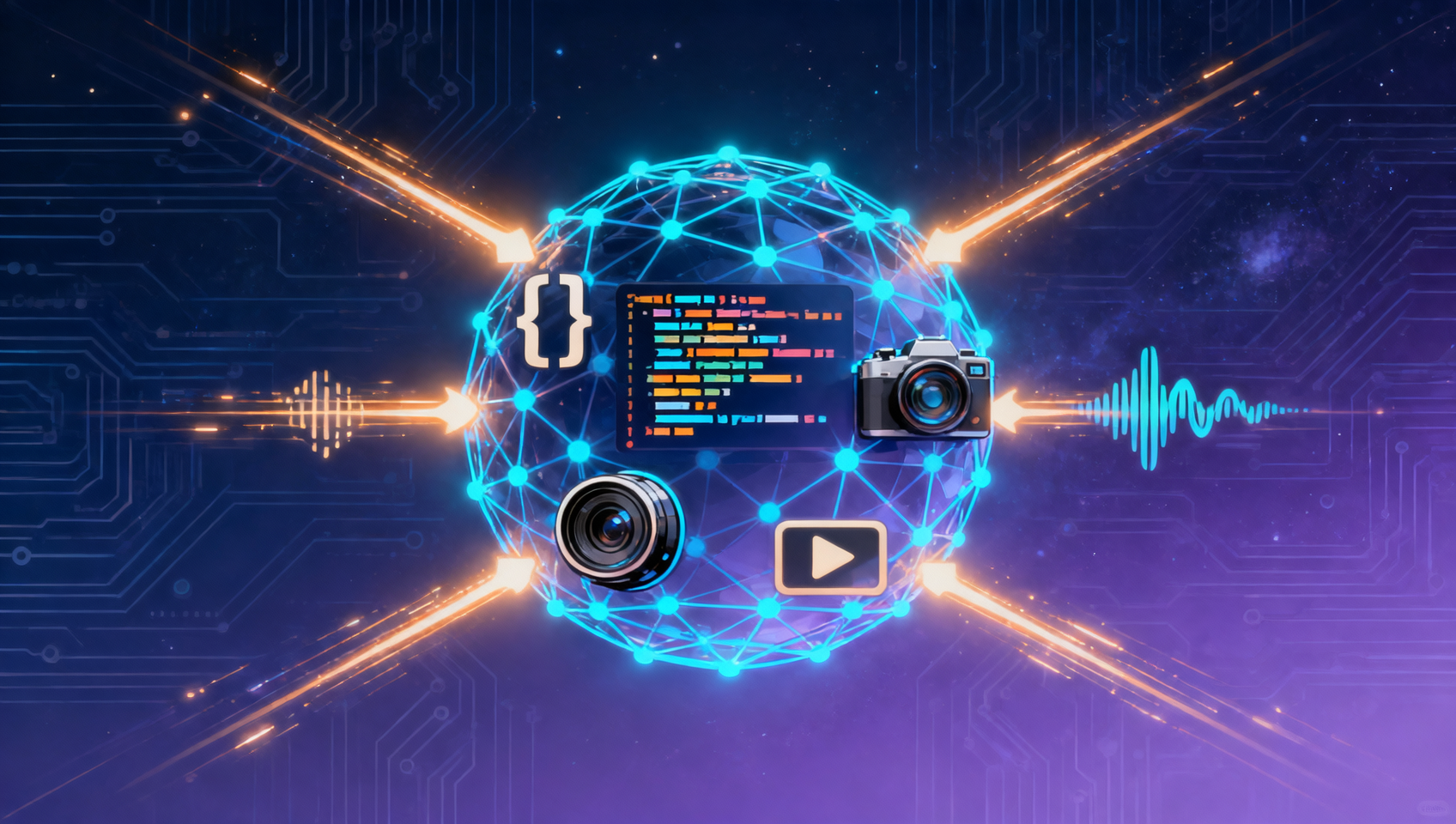
Most AI models claim “multimodal support.” Gemini 3 doesn’t just accept multiple inputs—it fuses them at the architecture level. No stitching. No fallback encoders. Text, code snippets, spectrograms, image crops, and video frames are processed through a unified representation space. That means when you paste a Python traceback alongside a screenshot of an error dialog and a 12-second screen recording of the failing UI flow, Gemini 3 doesn’t treat them as separate signals. It correlates line numbers with pixel artifacts, matches stack trace timestamps to frame indices, and identifies root causes across modalities—not sequentially, but concurrently.
This isn’t theoretical. On MidassAI Chat, we’ve stress-tested this with real-world engineering triage:
- Input: A
git diff(text), adocker logs --tail=50snippet (text + ANSI color codes), and a.webmof a crashing React component (video). - Output: A precise diagnosis (“
useEffectcleanup race inAuthContext.tsx, line 47–51; container restarts due to SIGSEGV from unmounted ref access”), plus a patch diff and a reproducible test case using Playwright.
No manual context linking. No copy-paste fragmentation. Just one prompt, one response—grounded in cross-modal evidence.
How Gemini 3 Reasons Like a Senior Engineer (Not Just a LLM)
Reasoning in Gemini 3 isn’t chain-of-thought abstraction—it’s iterative, stateful, and self-correcting. It maintains internal working memory across steps, validates assumptions against constraints, and backtracks when contradictions emerge. For example:
“Given a PostgreSQL schema with
orders(id, customer_id, status, created_at)andcustomers(id, tier, signup_date), generate a query that returns the top 5 VIP customers (tier = 'premium') by total order value in Q3 2024—but exclude orders marked ‘cancelled’ or ‘refunded’. Also, explain whycreated_at >= '2024-07-01' AND created_at < '2024-10-01'is safer thanEXTRACT(QUARTER FROM created_at) = 3 AND EXTRACT(YEAR FROM created_at) = 2024.”
Gemini 3 doesn’t just return SQL. It:
- Validates date logic against timezone-aware
timestamptzbehavior (not just syntax), - Flags that
EXTRACT()ignores timezones and fails on DST boundaries, - Generates a
WHEREclause using range predicates and addsORDER BY SUM(...) DESC LIMIT 5, - Notes that
status NOT IN ('cancelled', 'refunded')must precedeJOINto avoid Cartesian explosion, - Suggests indexing strategy (
CREATE INDEX ON orders (customer_id, status, created_at) WHERE status NOT IN ('cancelled', 'refunded');).
That’s not “reasoning”—it’s domain-aware systems thinking. And it happens without prompting for “think step-by-step.” It’s baked in.
Code Generation That Ships—Not Just Compiles
Gemini 3 generates code with production guardrails:
- Type-awareness: Infers TypeScript interfaces from JSON examples and enforces strict null checks (
!vs?vsundefinedhandling), - Dependency hygiene: Recommends
npm install --save-dev @types/node@20.12.7only if yourpackage.jsondeclares Node v20.12+, - Security-first defaults: Uses
crypto.subtle.digest()instead ofmd5(); rejectseval()even in “quick demo” contexts, - Test co-generation: Every function gets Jest/Pytest scaffolding with mocked I/O, not just stubs.
Try this on MidassAI Chat:
“Write a Rust CLI tool that accepts
--input <path>(CSV) and--output <path>(JSONL), filters rows whereage > 18 && country == 'US', and outputs anonymized***@***.com) andphone(XXX-XXX-XXXX format). Include clap args parsing, error propagation, and 3 unit tests covering valid/empty/invalid CSV.”
You’ll get:
- Full
Cargo.tomlwithclap = { version = "4.5", features = ["derive"] }, main.rswith properResult<(), Box<dyn Error>>propagation,tests/integration.rswith tempfile-based CSV fixtures,- And a note: “For production, add
csv::ReaderBuilder::has_headers(true)and validate email format via regex before anonymization.”
No boilerplate. No guesswork. Just executable, auditable, maintainable code.
Who This Is For (And Who It’s Not)
This is for:
- Frontend devs debugging layout shifts while reviewing Figma links and Lighthouse reports,
- DevOps engineers correlating Prometheus metrics screenshots with
kubectl describe podoutput andjournalctl -u nginxlogs, - Data scientists validating model drift by uploading training set histograms plus inference log samples plus a short video walkthrough of their dashboard anomalies,
- Technical writers drafting API docs from OpenAPI specs and Postman collection exports and annotated cURL recordings.
It’s not for:
- Users expecting “magic” without precise input framing (Gemini 3 amplifies signal—not noise),
- Teams relying on static prompt templates (its strength lies in dynamic, context-rich interaction),
- Legacy workflows that silo modalities (e.g., “upload image to Tool A, paste text into Tool B, then manually merge results”).
Quick Takeaways
Getting Started: Your First Multimodal Session on MidassAI Chat
- Go to MidassAI Chat — no sign-up required for basic use.
- Drag-and-drop or paste: Try a screenshot of a broken UI plus its HTML source plus a 10-second voice memo describing the bug (“button doesn’t submit, console shows ‘Cannot read property ‘submit’ of null’”).
- Ask directly: “Why does this fail? Show the fix and a Cypress test to catch it.”
- Iterate: Click “Explain this step” on any generated code block to unpack the logic—or ask “What assumptions did you make about the DOM structure?” to surface hidden dependencies.
We’ve seen users cut triage time from 90 minutes to under 7 minutes—not by speeding up typing, but by eliminating context-switching overhead. One fintech team reduced false-positive alert investigations by 63% after switching from “log grep + Kibana chart + Slack thread” to single-session multimodal analysis.
Gemini 3 isn’t another chatbot. It’s a co-pilot trained to navigate the messy, overlapping reality of how technical work actually happens—where code lives beside screenshots, where audio notes contain critical nuance, and where video captures what text can’t. The barrier isn’t capability anymore. It’s knowing how to point it at your real problems.
The model is ready. Your next workflow starts with a drag, a paste, and a question.